四环素(tetracycline,TC)广泛应用于畜牧业、 水产养殖业和医药行业[1]。因为难降解,易积累,所以残留的TC进入环境系统会严重威胁人类健康和生态环境安全[2]。当前,国内外对抗生素等环境新污染物高度关注,常规污水处理工艺不能有效去除新污染物,迫切需要开发新型、 高效、 低成本的新污染物深度处理剂及技术。
过一硫酸盐(peroxymonosulfate, PMS)中含有O—O键, 有较强的氧化能力, 在被光、 热、 过渡金属离子等激活后, O—O键发生断裂, 生成 能够氧化分解大部分有机污染物[3-4]。 与OH·相比,
 寿命期限更长,适用pH范围更宽,选择性高,残余对环境微生物影响较小,基于的高级氧化技术成为污水处理领域研究热点[5-6]。采用过渡金属催化PMS是产生常见方式,但由于难以控制产生速率,因此导致副反应较多,从而降低了有效利用率。另外过渡金属离子溶出容易造成二次污染,将过渡金属固定在催化剂上,可以有效克服上述缺点[7]。
近年来,利用金属有机骨架材料(metal organic framework material,MOFs)催化过一硫酸盐引起了研究人员广泛关注。例如Wang等[8]采用3类含氮丰富的MOFs材料制备了多种氮掺多孔碳材料,实验结果表明,掺氮的MOFs衍生碳材料对PMS催化能力优于无氮多孔碳材料的,甚至比均相Co2+体系的还要好。Duan等[9]在MIL-101(Fe)材料中引入多金属位点,制备出铜、 钴金属离子共掺MIL-101(Fe)材料,用于催化过硫酸盐,结果表明,多金属位点的引入提高了催化剂表面电子转换效率,大幅改善了对偶氮染料酸性橙7的去除效果。 Liu等[10]通过溶剂热法合成了氨基功能化的Fe-MOFs, 在反应时间为40 min时,双酚F去除率为91%。Wang等[11]制备的MIL-88A具有孔体积大、 孔径均匀、 热稳定性好等特点,当作为催化剂催化过硫酸盐去除染料金橙G(OG)时,对OG去除率高达96.4%。以上研究表明,通过对MOFs基材料进行前修饰或后修饰制备的催化剂,具有多孔结构、 活性位点多、 稳定性良好等特点,能够作为一种高效的非均相催化剂用于催化反应。
本研究中以TC为目标污染物,以MIL-88B(Co-Mn)为催化剂,以PMS为氧化剂,通过调控钴、锰物质的量比,催化剂、PMS掺量和反应体系pH等条件,实现对水中TC的高效去除,为水中抗生素类污染物高效去除提供有效的解决方案。
1 材料与方法
1.1 试剂材料和仪器设备
试剂材料:TC(质量分数为98%)、 硝酸钴、 硝酸锰、 对苯二甲酸(DMF)(质量分数均为99%)(上海麦克林生化科技有限公司); N,N-二甲基甲酰胺(DMF,质量分数为99.5%,国药集团化学试剂有限公司); 浓硫酸、 氢氧化钠(质量分数均为99%,天津市大茂化学试剂厂); 甲醇(MeOH,质量分数为99%,天津市富宇精细化工有限公司)。
仪器设备: 5415D型高速离心机(德国Eppendorf公司); Gemini 300型扫描电子显微镜(SEM,德国蔡司公司); AXS D8型X射线衍射仪(XRD,德国Bruker公司); Axis Supra型X-ray光电子能谱仪(XPS,日本岛津公司); SARTORIUS AG型电子天平(德国赛多利斯公司); UV-9000s型紫外分光光度计(上海美泰仪器有限公司)。
1.2 MIL-88B(Cox-Mn1-x)催化剂制备
将总质量为320 mg的Co(NO3)2·6H2O和Mn(NO3)2·4H2O按照物质的量比分别为1∶0、 1∶1、 3∶1、 3∶2、 0∶1溶解在体积为20 mL、 质量为160 mg的DMF溶液中, 磁力搅拌, 时间为30 min[12]。得到的浅红色溶液转移至体积为50 mL的反应釜中,在温度为160 ℃的马弗炉中反应,时间为24 h,后冷却至室温,分别用DMF、 MeOH及去离子水清洗,得到砖红色粉末状产物,最后在温度为60 ℃烘箱中,进行干燥,时间为12 h。制备得到的催化剂分别标记为MIL-88B(Co)、 MIL-88B(Co0.5-Mn0.5)、 MIL-88B(Co0.75-Mn0.25)、 MIL-88B(Co0.6-Mn0.4)、 MIL-88B(Mn)。
采用XRD检测催化材料内部晶体结构,采用SEM分析表面形貌特征,采用XPS分析元素组成。
1.3 去除TC实验
将质量为5 mg催化剂添加到体积为100 mL、 质量浓度为10 mg/L的TC溶液中, 置于温度为25 ℃的水浴振荡箱; 通过添加一定质量PMS启动降解反应,在反应时间分别为0、 10、 20、 30、 40、 50、 60 min时用注射器取出5 mL样品,通过孔径为0.45 μm的微孔膜过滤,加入一定量MeOH猝灭剂,采用紫外分光光度计在波长为357 nm时测量TC吸光度,计算TC去除率。
2 结果与分析
2.1 MIL-88B(Co-Mn)性能表征
2.1.1 XRD分析
催化剂的XRD谱图如图1所示。 由图可知, 催化剂的XRD特征峰尖锐且基线平稳, 在衍射角2θ为14°、 16°、 18°、 27°、 45°处附近都出现了明显的特征衍射峰, 与纯相的MIL-88B主要特征峰一致。 钴、 锰不同物质的量比的MIL-88B(Cox-Mn1-x)衍射图谱相似, 仅观察到细微差异, 表明钴、 锰不同物质的量比对MIL-88B结构的影响可忽略不计。 相对于模拟值, MIL-88B(Co0.6-Mn0.4)在衍射角2θ为10°~13°处的特征峰强度弱, 主要是因为Co或Mn的界面吸附了客体分子, 进而影响配体与金属的构效关系。 MIL-88B(Cox-Mn1-x)特征峰与MIL-88B的XRD谱图特征峰位置一致, 表明催化剂制备成功。
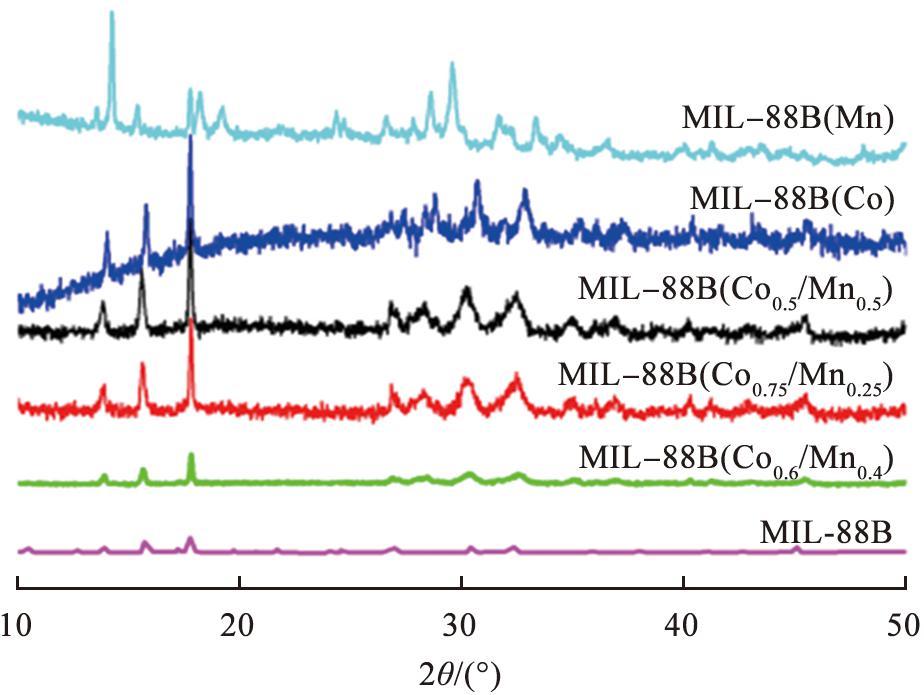
图1 催化剂的XRD谱图
Fig.1 XRD spectrum of catalysts
2.1.2 SEM分析
催化剂的SEM图像如图2所示。 由图可知, MIL-88B(Cox-Mn1-x)材料明显呈现出较为均一、 轮廓分明的三维蜂巢状结构。 MIL-88B(Co)直径约为12 μm, 呈分级花状结构。 MIL-88B(Mn)直径约为25 μm, 表面较粗糙, 有颗粒感。 MIL-88B(Co0.6-Mn0.4)直径约为16 μm,表面凹凸有致,呈不规则形状。随着MIL-88B(Cox-Mn1-x)中锰掺量增加,催化剂直径逐渐增大,催化剂表面边缘锐度逐渐下降。图2(d)呈现了Co、 Mn、 C、 O元素在MIL-88B(Co0.6-Mn0.4)材料中的分布,表明金属与碳氧元素具有均匀分布的特征。
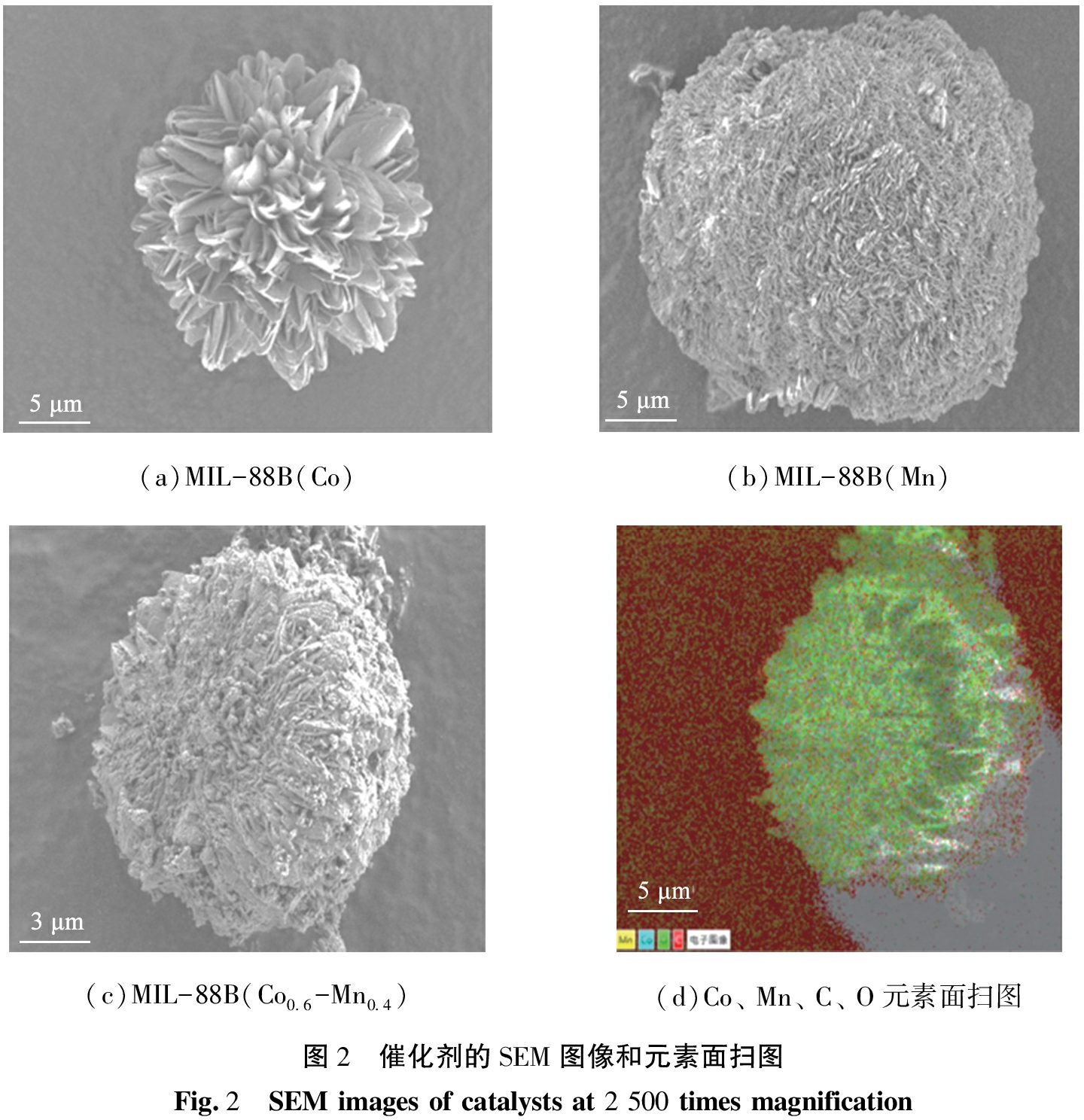
(a)MIL-88B(Co)(b)MIL-88B(Mn)(c)MIL-88B(Co0.6-Mn0.4)(d)Co、 Mn、 C、 O元素面扫图图2 催化剂的SEM图像和元素面扫图Fig.2 SEM images of catalysts at 2 500 times magnification
2.1.3 XPS分析
为了确定催化剂的元素价态和表面元素组成, 采用XPS对催化剂组成进行研究, 催化剂的XPS谱图如图3所示。由图可知,该图分析了MIL-88B(Co0.6-Mn0.4)中的元素形态, 在图3(a)的全谱图中检测到Co、 Mn、 C、 O等元素。 MIL-88B(Co0.6-Mn0.4)材料中观察到不同价态Co、 Mn元素, 进一步对Mn 2p、 Co 2p的XPS谱图进行分析, 由图3(b)可知, Mn 2p谱峰可被分解为2个Mn2+的自旋轨道峰峰值分别位于结合能为640.88、 652.38 eV处, Mn3+的自旋轨道峰峰值分别位于结合能为640.88、 652.38 eV处[13]。从图3(c)可以看出,Co 2p的谱峰可被分解为2个Co2+的自旋轨道峰,峰值分别位于结合能为780.58、 796.78 eV处,Co3+的自旋轨道峰,峰值分别位于结合能为781.98、 797.58 eV处[14]。同时, 可在结合能为787.28、 803.58eV处观测到2个卫星峰, 证实了Co2+与Co3+的存在[15]。 以上结果表明, MIL-88B(Co0.6-Mn0.4)催化剂中Co、 Mn元素主要以Co2+、 Co3+、 Mn2+、Mn3+的形式存在, 通过MIL-88B中引入Co、 Mn双金属活性位点, 可进一步提升催化PMS过程的电子转移效率, 从而促进生成, 提高催化剂对污染物的去除性能。
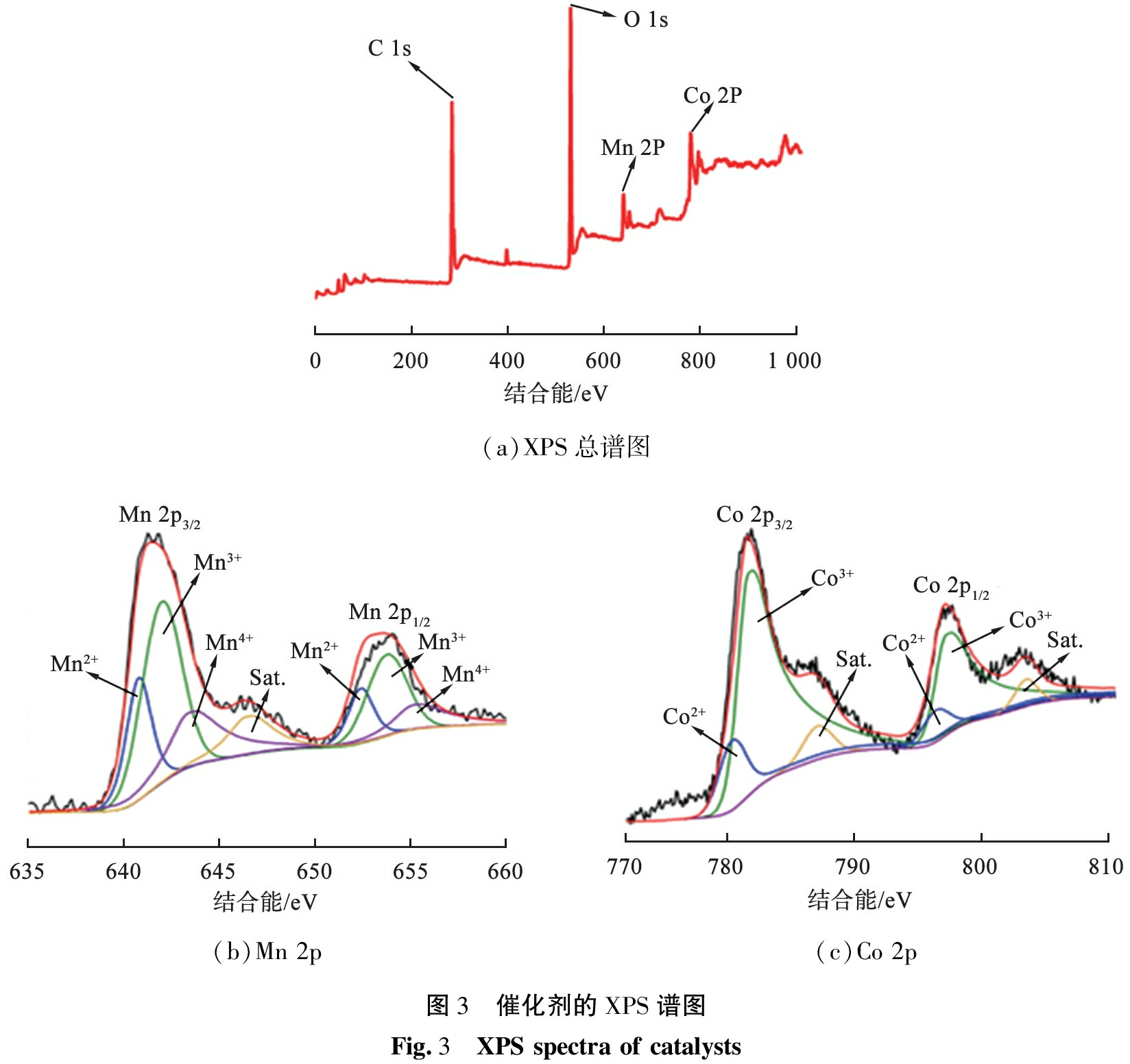
(a)XPS总谱图(b)Mn 2p(c)Co 2p图3 催化剂的XPS谱图Fig.3 XPS spectra of catalysts
2.2 MIL-88B(Cox-Mn1-x)催化PMS去除TC性能及条件优化
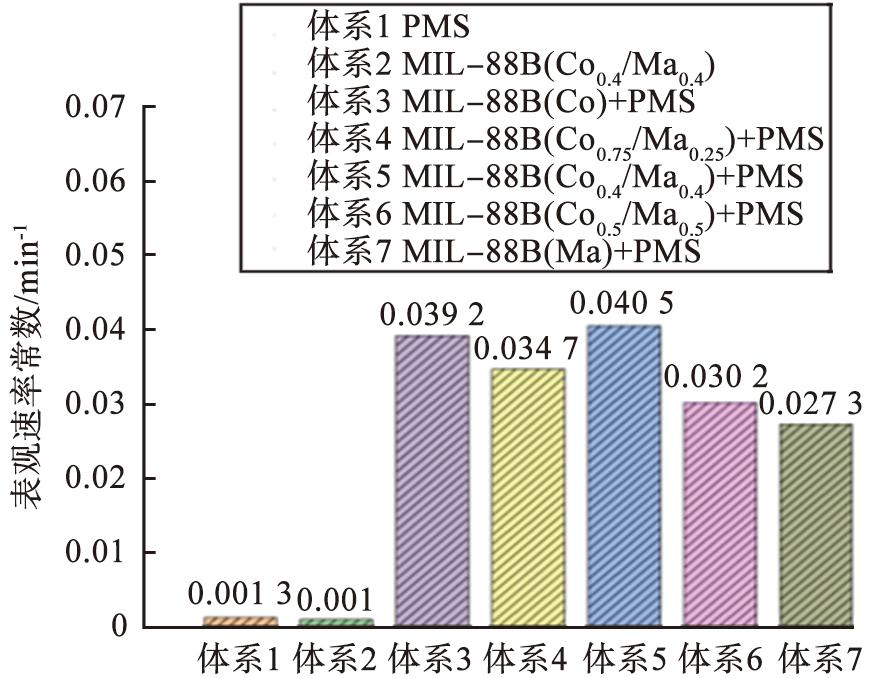
为了更好地解释MIL-88B(Co0.6-Mn0.4)催化PMS的降解机制,在不同条件下对TC去除率进行测定,不同体系对TC去除效果的影响如图4所示。由图4(a)可知,当只有PMS存在时,体系对TC的去除率仅为7.7%,表明PMS对TC去除的氧化作用较弱。在仅有MIL-88B(Co0.6-Mn0.4)存在下,体系中TC去除率仅为5.7%,表明MIL-88B(Co0.6-Mn0.4)对TC吸附作用较弱,可以忽略吸附作用对TC去除的影响。在MIL-88B(Cox-Mn1-x)和PMS共存条件下,TC去除率大幅提高,反应60 min后,MIL-88B(Co)-PMS体系中TC去除率为90.5%,MIL-88B(Co0.75-Mn0.25)-PMS体系中TC去除率达到87.5%,MIL-88B(Co0.6-Mn0.4)-PMS体系中TC去除率达到91.2%,MIL-88B(Co0.5-Mn0.5)-PMS体系中TC去除率为83.7%,MIL-88B(Mn)-PMS体系中TC去除率为80.5%。上述结果表明,金属钴作为活性中心是催化主体,随着催化剂中替代金属锰掺量的增加,强活性点位逐渐减少,导致催化PMS的性能逐渐减弱,但MIL-88B(Co0.6-Mn0.4)-PMS体系表现出了优异的催化性能,反应时间60 min后,TC去除率高达91.2%,表明适当的钴、锰物质的量比可促进金属有机框架材料的双金属协同作用[16-17]。
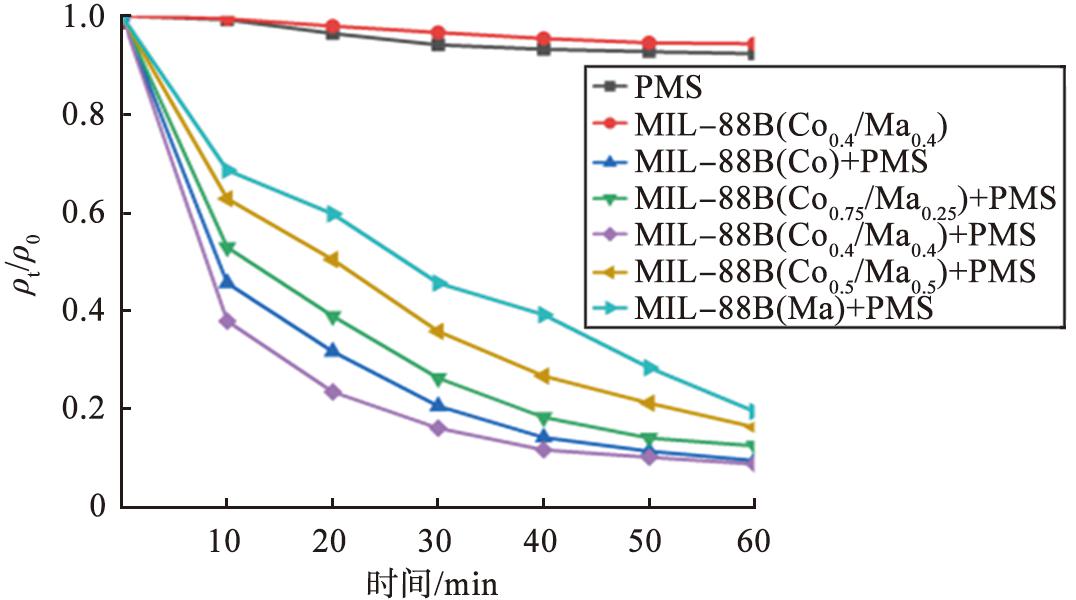
(a)不同体系
(b)不同体系表观速率常数
ρt/ρ0—t时刻、 初始时刻四环素质量浓度的比值。
图4 不同体系对四环素去除效果的影响
Fig.4 Impact of different systems on the effect of tetracycline removal
图4(b)显示了不同体系下表观速率常数kobs值,MIL-88B(Co)的kobs值为0.039 2 min-1,MIL-88B(Co0.75-Mn0.25)的kobs值为0.034 7 min-1,MIL-88B(Co0.6-Mn0.4)的kobs值为0.040 5 min-1,MIL-88B(Co0.5-Mn0.5)的kobs值为0.030 2 min-1,MIL-88B(Mn)的kobs值为0.027 3min-1。MIL-88B(Co0.6-Mn0.4)的kobs值最大,比MIL-88B(Co)的增大3.3%,比MIL-88B(Co0.75-Mn0.25)的增大16.7%,比MIL-88B(Co0.5-Mn0.5)的增大34.1%,比MIL-88B(Mn)的增大48.4%,充分体现了MIL-88B(Co0.6-Mn0.4)-PMS体系优异的催化性能。
考察MIL-88B(Co0.6-Mn0.4)催化PMS去除TC的性能影响因素, 包括MIL-88B(Co0.6-Mn0.4)质量浓度、 PMS浓度及pH, 不同因素对TC去除效果的影响如图5所示。 由图5(a)、 (b)可知, MIL-88B(Co0.6-Mn0.4)质量浓度从10 mg/L提高至50 mg/L时, TC去除率从79.2%增加到92.1%, 表观速率常数kobs从0.026 2 min-1提升到0.042 3 min-1, 表明增加MIL-88B(Co0.6-Mn0.4)催化剂质量浓度能显著提升TC的去除率。 由图6(a)可知, 当MIL-88B(Co0.6-Mn0.4)质量浓度从50 mg/L增加到100 mg/L时, TC去除率和kobs值均大幅减少, 这可能是过高质量浓度催化剂易发生自团聚所致[18], 同时使产生的被吸附固定在催化剂表面。 基于以上结果, 催化剂最佳质量浓度选取为20 mg/L。
ρt/ρ0—t时刻、 初始时刻四环素质量浓度的比值。
图6 催化体系中活性物种猝灭剂对四环素去除的影响
Fig.6 Effects of active species sterilizers in the catalytic system on tetracycline removal
由图5(c)、 (d)可知,PMS浓度从0.1 mmol/L逐步增加至2.0 mmol/L时, TC去除率从78.7%增加到94.8%, kobs值从0.025 8 min-1提升到0.049 3 min-1,表明增加PMS浓度能显著提升TC去除率,但PMS浓度从2.0 mmol/L逐步提高至4.0 mmol/L后,TC去除率及kobs值反而略微减少,这可能是PMS浓度增加导致过量活性自由基发生自猝灭所致[19-20]。基于成本和效率考虑,PMS最佳投加浓度为2.0 mmol/L。
由图5(e)、 (f)可知,pH从3增大至9时,TC去除率均在80%以上,表明MIL-88B(Co0.6-Mn0.4)在相当宽泛的酸碱度条件下对TC均有较好去除效果。当pH从3增大至5时,TC去除率从84.6%增大到94.8%,kobs值从0.035 2 min-1增大到0.049 3 min-1,pH从5增大至7时,TC去除率和kobs值均略微减少,当pH增大至9时,TC去除率减少至86.2%,kobs值减少至0.033 0 min-1。TC去除效率在弱酸性条件下达到最高,其次是在中性条件下,在强酸或者碱性条件去除效果较差,原因是在强酸性条件下TC分子呈质子化形态(TCH3+)[21],MIL-88B(Co0.6-Mn0.4)表面呈带正电状态,TC分子和MIL-88B(Co0.6-Mn0.4)接触会产生静电排斥效应;在碱性条件下,OH-会导致PMS自分解为O2和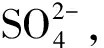 使反应体系产生配合物氢氧化钴等[22],导致TC去除效果降低。综合考量,最佳pH为5。
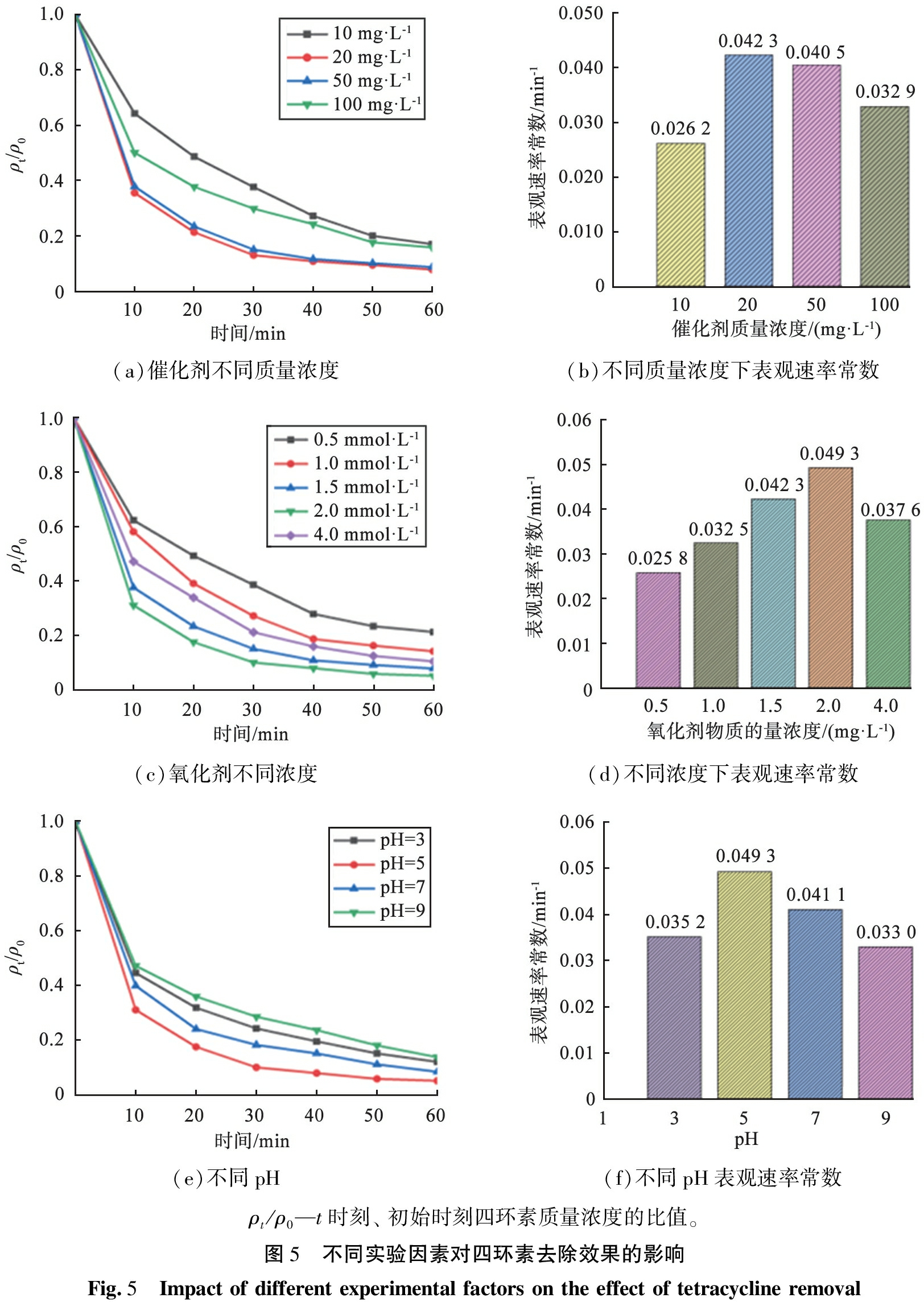
(a)催化剂不同质量浓度(b)不同质量浓度下表观速率常数(c)氧化剂不同浓度(d)不同浓度下表观速率常数(e)不同pH(f)不同pH表观速率常数ρt/ρ0—t时刻、 初始时刻四环素质量浓度的比值。图5 不同实验因素对四环素去除效果的影响Fig.5 Impact of different experimental factors on the effect of tetracycline removal
2.3 自由基猝灭实验
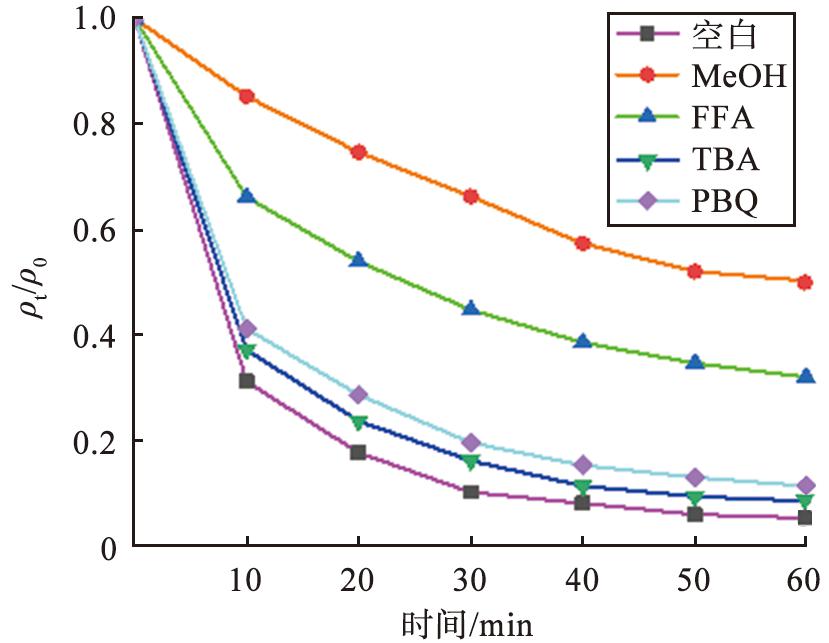
向体系中分别加入猝灭剂叔丁醇(TBA)、 糠醇(FFA)、 对苯醌(PBQ)、 MeOH来确定活性物种类型。 MeOH对OH·与均有良好的淬灭作用, TBA对OH·具有很好的淬灭作用。 PBQ是典型的猝灭剂,FFA是1O2猝灭剂。催化体系中活性物种猝灭剂对TC去除的影响如图6所示。由图可知,反应体系加入TBA后,TC去除率为91.6%,表明OH·对TC去除的作用影响较小。反应体系加入FFA后,TC去除率为68.1%,说明体系中存在活性物种1O2。反应体系加入PBQ后,TC去除率减少为88.7%,表明 对TC去除作用影响较小。反应体系加入MeOH后,TC去除率减少为49.8%,与对照条件下去除率(94.8%)相比大幅减少,充分表明,是反应体系主要的活性物种。MeOH、 FFA的加入对TC去除作用均产生了抑制,从反应速率上来看,MeOH的抑制作用强于FFA的。以上结果表明,
 1O2是TC去除的主要活性物种。
催化体系去除TC机制分析如图7所示。由图可知,MIL-88B(Co0.6-Mn0.4)-PMS体系实现TC高效去除主要是自由基和非自由基1O2作用。通过金属有机框架材料的双金属协同作用,进一步增强了催化剂表面电子转化效率,促进和1O2等产生,是该体系高效去除水中TC的关键。化学反应式如下:

(1)
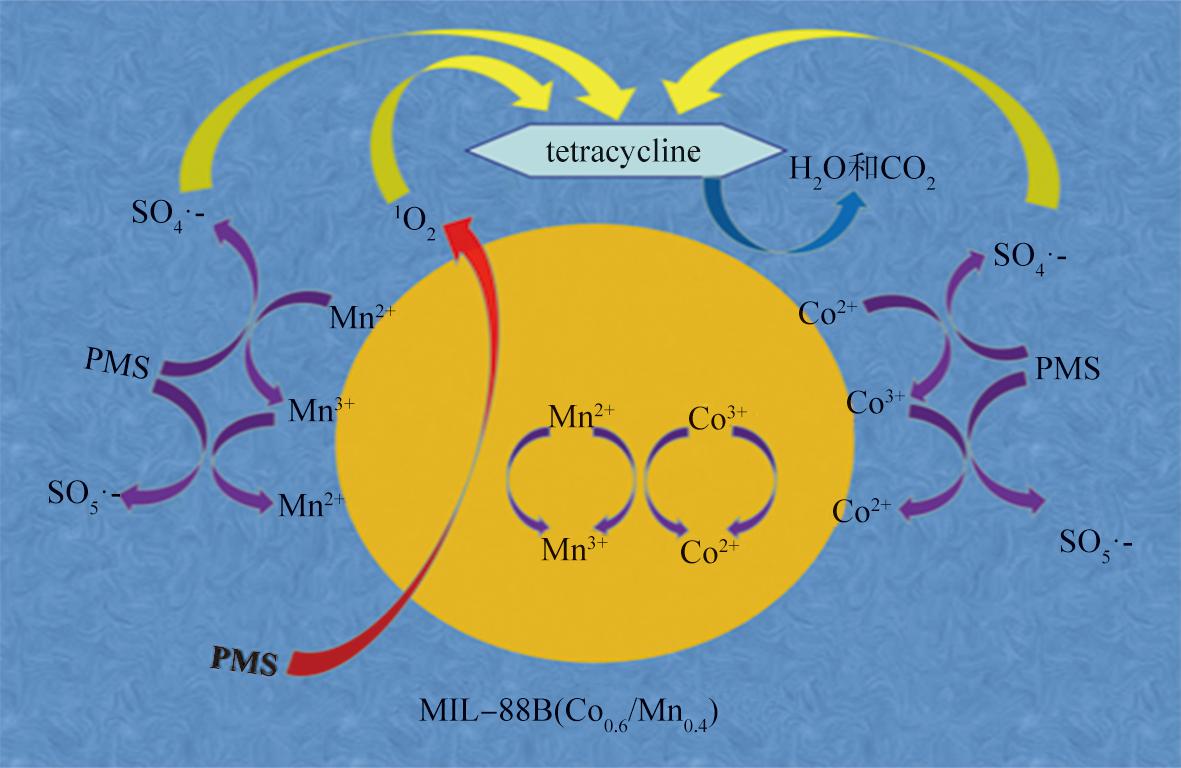
图7 催化体系去除四环素机制分析
Fig.7 Catalytic system removal of tetracycline mechanical analysis

(2)

(3)

(4)

(5)
Co3++Mn2+→Co2++Mn3+。
(6)
2.4 催化剂循环稳定性
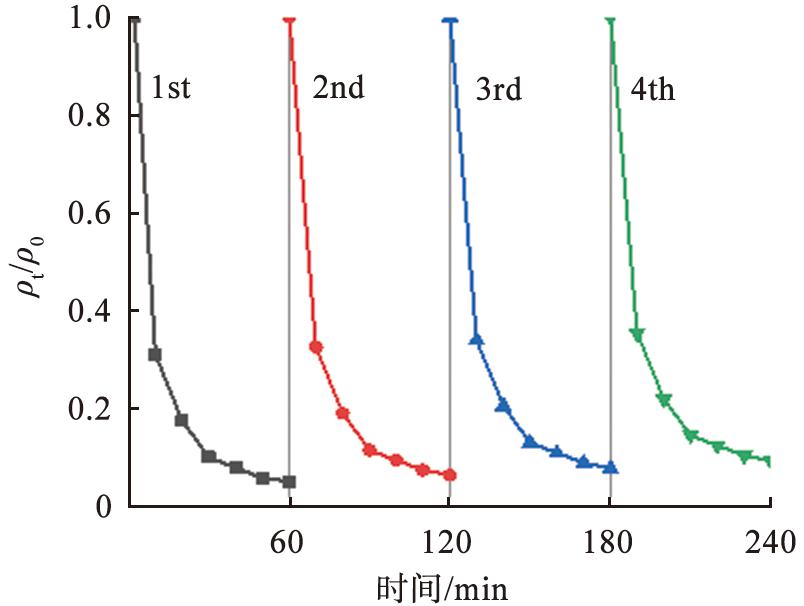
为了科学评估MIL-88B(Co0.6-Mn0.4)可循环利用性,进行4次循环使用实验,催化剂循环使用效果图如图8所示。由图可知,随着使用次数增加,TC去除率分别达到了94.8%、 93.5%、 92.1%、 90.6%,TC去除率逐渐降低,但去除率降幅很小,在第4次循环使用时TC去除率率仍可达90%以上,表明MIL-88B(Co0.6-Mn0.4)具有较好的稳定性。
ρt/ρ0—t时刻、 初始时刻四环素质量浓度的比值。
图8 催化剂循环使用效果图
Fig.8 Catalyzer cycle use efficiency diagram
3 结论
制备钴、 锰共掺杂有机金属框架固体粉状材料MIL-88B(Co0.6-Mn0.4),作为PMS高效催化剂,成功实现了水中TC高效去除,并确定了影响因素的最优参数。在MIL-88B(Co0.6-Mn0.4)质量浓度为20 mg/L、 PMS浓度为2 mmol/L、 pH为5,反应时间为60 min时,对TC去除率可达94.8%。MIL-88B(Co0.6-Mn0.4)-PMS体系去除TC是以和1O2为主要活性物种。循环使用4次后,TC的去除率仍可达90.6%,相较于初次使用去除率减少4.2%,证明MIL-88B(Co0.6-Mn0.4)是一种可重复利用的高效新型催化剂,更是一种处理实际抗生素废水的可行技术,具有广阔的市场应用前景。
利益冲突声明(Conflict of Interests)
所有作者声明不存在利益冲突。
All authors disclose no relevant conflict of interests.
作者贡献(Author’s Contributions)
耿上帅和闫涛参与了实验设计,王皓企、 梁飞、 王立君、 魏东、 闫良国参与了论文的写作和修改。所有作者均阅读并同意了最终稿件的提交。
The study was designed by GEN Shangshuai and YAN Tao. The manuscript was drafted and revised by WANG Haoqi, LIANG Fei, WANG Lijun, WEI Don and YAN Liangguo. All authors have read the last version of paper and consented for submission.
[1]ZHOU D, CAI Y P, YANG Z F, et al. Interplay of compound pollutants with microplastics transported in saturated porous media: effect of co-existing graphene oxide and tetracycline[J]. Journal of Contaminant Hydrology, 2023, 259: 104255.
[2]SHEVELEVA S A, KHOTIMCHENKO S A, MINAEVA L P, et al. Minor antibiotics residues in food: what are the risks for consumers?[J]. Voprosy Pitaniia, 2021, 90(3): 50-57.
[3]朱睿, 谭烨, 李春全, 等. 基于过渡金属活化的过硫酸盐高级氧化技术研究进展[J]. 化工矿物与加工, 2022, 51(1): 49-55.
ZHU R, TAN Y, LI C Q, et al. Research progress of advanced persulfate oxidation technology based on activation by transition metals[J]. Industrial Minerals &Processing, 2022, 51(1): 49-55.
[4]HE H N, ZHAO J F. The efficient degradation of diclofenac by ferrate and peroxymonosulfate: performances, mechanisms, and toxicity assessment[J]. Environmental Science and Pollution Research International, 2022, 30(5): 11959-11977.
[5]GAO Y X, GAO W R, ZHU H N, et al. A review on n-doped biochar for oxidative degradation of organic contaminants in wastewater by persulfate activation[J]. International Journal of Environmental Research and Public Health, 2022, 19(22): 14805.
[6]ZHAO C K, ZHONG S, LI C Y, et al. Property and mechanism of phenol degradation by biochar activated persulfate[J]. Journal of Materials Research and Technology, 2020, 9(1): 601-609.
[7]HUANG Y X, LIN H, ZHANG Y H. Synthesis of MIL-101(Fe)-SiO2 composites with improved catalytic activity for reduction of nitroaromatic compounds[J]. Journal of Solid State Chemistry, 2020, 283: 121150.
[8]WANG G L, CHEN S, QUAN X, et al. Enhanced activation of peroxymonosulfate by nitrogen doped porous carbon for effective removal of organic pollutants[J]. Carbon, 2017, 115: 730-739.
[9]DUAN M J, GUAN Z Y, MA Y W, et al. A novel catalyst of MIL-101(Fe) doped with Co and Cu as persulfate activator: synthesis,characterization, and catalytic performance[J]. Chemical Papers, 2018, 72(1): 235-250.
[10]LIU Z, SU R D, SUN X, et al. The obvious advantage of amino-functionalized metal-organic frameworks: as a persulfate activator for bisphenol F degradation[J]. Science of the Total Environment, 2020, 741: 140464.
[11]WANG J, WAN J, MA Y, et al. Metal-organic frameworks MIL-88A with suitable synthesis conditions and optimal dosage for effective catalytic degradation of orange G through persulfate activation[J]. RSC Advances, 2016, 6(113): 112502-112511.
[12]ZHANG R Z, YU Z B, JIANG R H, et al. Dual synergistic effect of S-doped carbon bridged semi crystalline MILN-based Co3S4-MnS2 nanostructure in electrocatalytic overall water splitting[J]. Electrochimica Acta, 2021, 366: 137438.
[13]YAO L L, YANG W X, LIU H L, et al. Synthesis and ORR electrocatalytic activity of mixed Mn-Co oxides derived from divalent metal-based MIL-53 analogues[J]. Dalton Transactions, 2017, 46(44): 15512-15519.
[14]ZHOU J J, JI W X, XU L, et al. Controllable transformation of CoNi-MOF-74 on Ni foam into hierarchical-porous Co(OH)2-Ni(OH)2 micro-rods with ultra-high specific surface area for energy storage[J]. Chemical Engineering Journal, 2022, 428: 132123.
[15]SEAL N, KARTHICK K, SINGH M, et al. Mixed-ligand-devised anionic MOF with divergent open Co(II)-nodes as chemo-resistant, bi-functional material for electrochemical water oxidation and mild-condition tandem CO2 fixation[J]. Chemical Engineering Journal, 2022, 429: 132301.
[16]ZHAO Y, LI B, LI Y, et al. Synergistic activation of peroxymonosulfate between Co and MnO for bisphenol A degradation with enhanced activity and stability[J]. Journal of Colloid and Interface Science, 2022, 623: 775-786.
[17]LI J, HUANG H L, XUE W J, et al. Self-adaptive dual-metal-site pairs in metal-organic frameworks for selective CO2 photoreduction to CH4[J]. Nature Catalysis, 2021, 4(8): 719-729.
[18]HOU C, CHEN W Q, FU L H, et al. Facile synthesis of a Co-Fe bi-MOFs-CNF membrane nanocomposite and its application in the degradation of tetrabromobisphenol A[J]. Carbohydrate Polymers, 2020, 247: 116731.
[19]LONG X H, SHI H L, HUANG R F, et al. Identifying the evolution of primary oxidation mechanisms and pollutant degradation routes in the electro-cocatalytic Fenton-like systems[J]. Journal of Hazardous Materials, 2023, 445: 130577.
[20]BAI J, LI Y H, SONG B W, et al. Activation of peroxymonosulfate by modified coagulation sludge for bisphenol A degradation[J]. Environmental Science and Pollution Research International, 2022, 29(52): 78832-78847.
[21]JIANG X, GUO Y H, ZHANG L B, et al. Catalytic degradation of tetracycline hydrochloride by persulfate activated with nano FeO immobilized mesoporous carbon[J]. Chemical Engineering Journal, 2018, 341: 392-401.
[22]SU S N, GUO W L, LENG Y Q, et al. Heterogeneous activation of oxone by CoxFe3-xO4 nanocatalysts for degradation of rhodamine B[J]. Journal of Hazardous Materials. 2013, 244: 736-742.
 ultimately improving the removal performance of pollutants. The catalytic performance of the catalyst is appraised through TC elimination over MIL-88B(Co