金属粉尘爆炸是粉尘爆炸事故主要类型之一,事故影响范围及程度难以预测和控制[1],因此,国内外学者针对金属粉尘爆炸开展了一系列研究。Wang等[2]、 Serrano等[3]和Reding等[4]分别研究了铝粉在不同气体环境、粉尘粒径和颗粒形状时的爆炸敏感性和严重性。Millogo等[5]、 Luo等[6]分别讨论了镁铝合金粉尘在不同含量和不同粒径时的爆炸特性。粒径是影响金属粉尘爆炸的重要因素,微米级金属粉尘的着火敏感性和爆炸强度随粉尘粒径减小而增强[7],爆炸发生的可能性和严重程度增加。此外,铝[8]、 镁铝合金[9]粉尘的爆炸特性已得到广泛研究,而锌粉爆炸相关研究较少。日本福岛汤本工厂2021年5月发生的锌粉爆炸事故导致4人受伤,说明锌粉被广泛利用于工业生产的同时存在爆炸危险性。鉴于此,以粒径为1 μm锌粉作为研究对象开展爆炸危险性研究,对锌粉行业安全生产过程中微米级粉尘爆炸防治具有现实意义。
通过测定粒径1 μm锌粉的爆炸下限(粉尘云在既定点火能量作用下能发生燃烧的最小质量浓度)、 最大爆炸压力(多种质量浓度下试验确定的相对于点火时刻容器内压力的最大超压值)。
1 试验
1.1 设备和材料
材料:粒径为1 μm的锌粉(质量分数为99.9 %,上海乃欧纳米科技有限公司),X射线衍射(XRD)图如图1所示。锌粉粉末主要成分为锌,少量的氧化锌是在空气中氧化形成的氧化膜。
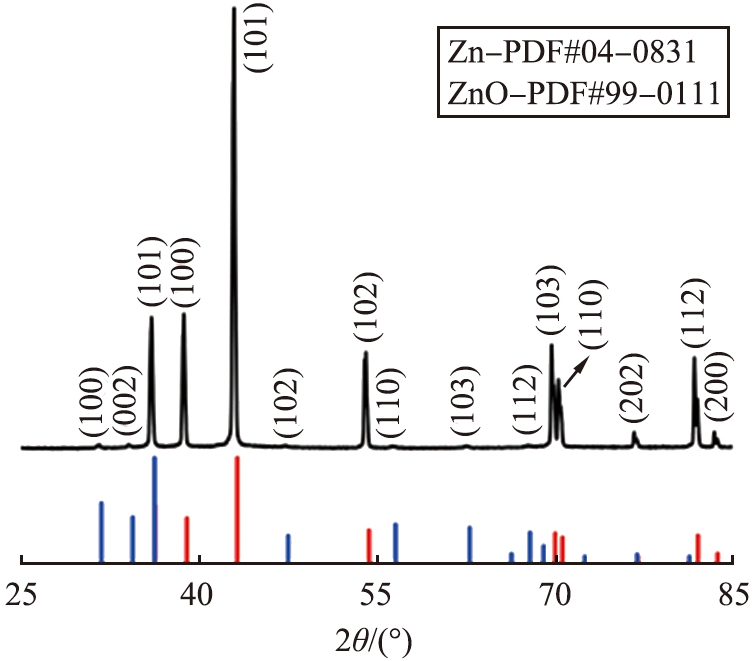
图1 锌粉X射线衍射图
Fig.1 XRD spectra of zinc powders
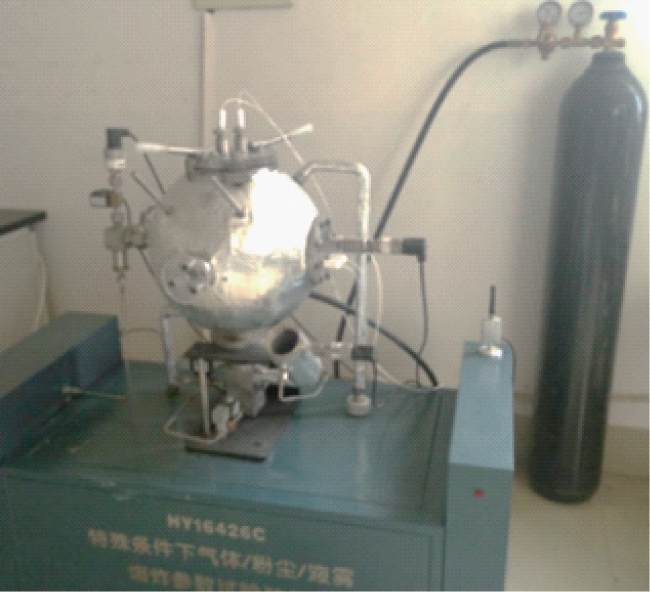
图2 20 L球罐爆炸试验装置
Fig.2 20 L spherical explosion test device
设备:HY16426C型20 L爆炸试验装置(吉林市宏源科学仪器有限公司); MiniFlex600-C型台式X射线衍射仪(日本理学株式会社); Phenom ProX型扫描电子显微镜(SEM,荷兰Phenom公司)。20 L爆炸试验装置如图2所示。
1.2 方法
在温度为22~25 ℃,相对湿度为50%~60%的环境下进行试验。使用总能量为10 J的化学点火具点火。以爆炸压力(即爆炸过程中达到相对于点火时刻容器内压力的最大超压)大于等于0.05 MPa为判断爆炸成功的依据[11]。
首先取质量浓度为5 000 g/m3的锌粉放入20 L球罐爆炸试验装置样品仓,在140~260 ms范围内以40 ms为间隔改变点火延迟时间。启动试验装置进行试验,每组试验连续进行3次,取爆炸压力均值。均值最大值所对应的点火延迟时间为锌粉爆炸最佳点火延迟时间。
以500 g/m3的整数倍调整粉尘质量浓度, 将粉尘投入样品仓后每组进行3次平行试验, 将爆炸压力均值小于0.05 MPa的最大质量浓度定为ρ1, 爆炸压力均值大于或等于0.05 MPa的最小质量浓度定为ρ2, 锌粉爆炸下限介于ρ1和ρ2之间[11]。利用SEM分析爆炸产物和锌粉未爆炸前的形貌差异。
试验所得锌粉爆炸压力随时间变化曲线如图3所示(点火延迟时间为180 ms、 粉尘质量浓度为5 000 g/m3)。 压力曲线所达最大值为爆炸压力pm,压力曲线最大斜率为爆炸压力上升速率(dp/dt)m,喷粉时刻与点火时刻的时间差为点火延迟时间tv,点火后达到爆炸压力上升速率所需时间为爆炸压力上升速率时间t1,达到爆炸压力所需时间为爆炸压力时间t2。根据公式(1)可计算爆炸指数Kst。
Kst=(dp/dt)mV1/3,
(1)
式中: (dp/dt)m为爆炸压力上升速率; V为容器容积。
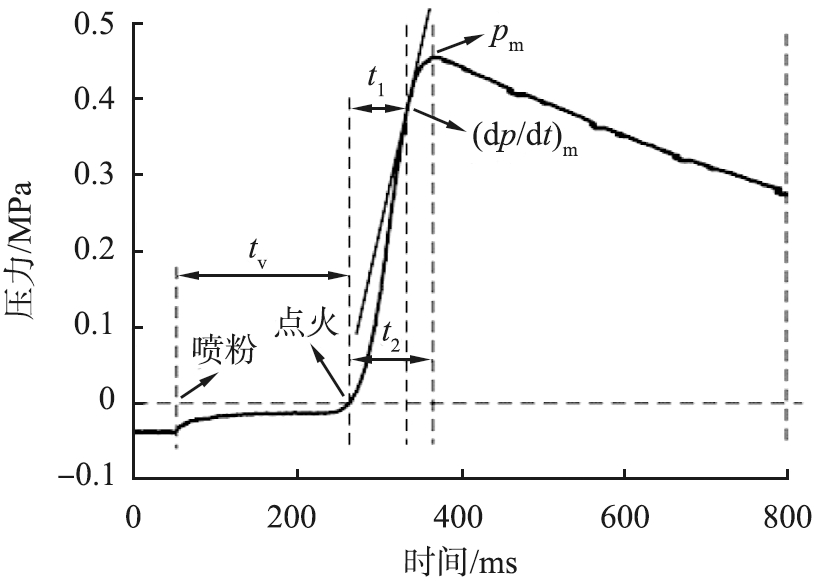
图3 锌粉爆炸压力随时间变化曲线
Fig.3 Zinc powders explosion pressure curve with time
2 结果与讨论
2.1 锌粉及其爆炸产物形貌
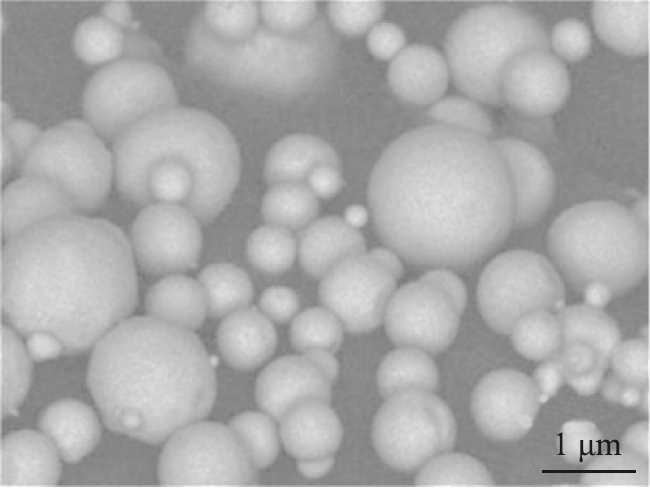
(a)锌粉
(b)锌粉爆炸产物
图4 锌粉及其爆炸产物SEM图像
Fig.4 SEM images of zinc powders and explosion products
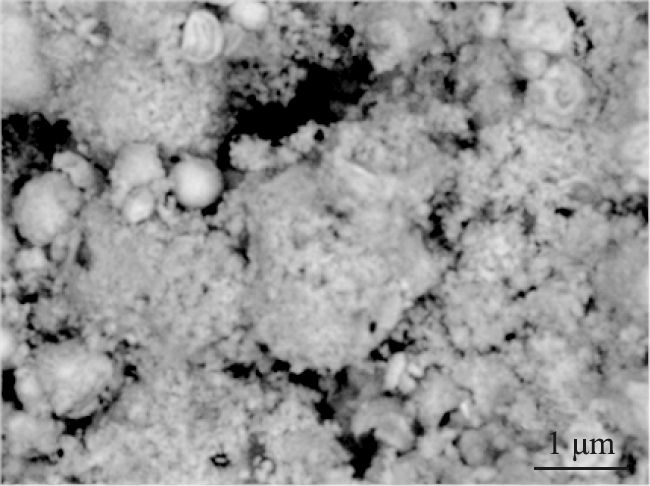
图4为锌粉及其爆炸产物SEM图像,对比发现:锌粉颗粒呈表面光滑的球状,粒径较大的颗粒表面易吸附小粒径颗粒,爆炸产物粒径远小于锌粉颗粒,呈团聚状;锌粉爆炸为气相燃烧过程,热量首先击碎锌表面的氧化膜[12-13],随温度上升,内部的锌熔融后蒸发,形成锌蒸气向外扩散,与空气混合并燃烧,生成粒径极小的氧化锌颗粒,过程中不断放出热量,使周围空气受热膨胀,形成高压;较大的颗粒中,靠近表面的锌先与氧反应,生成的氧化锌极易连结而包裹靠近颗粒中心的液态锌,可能导致锌无法完全形成气态;粒径越小,表面氧化锌被破坏后,锌粉由固态转化为气态的能力越强。
2.2 锌粉爆炸最佳点火延迟时间
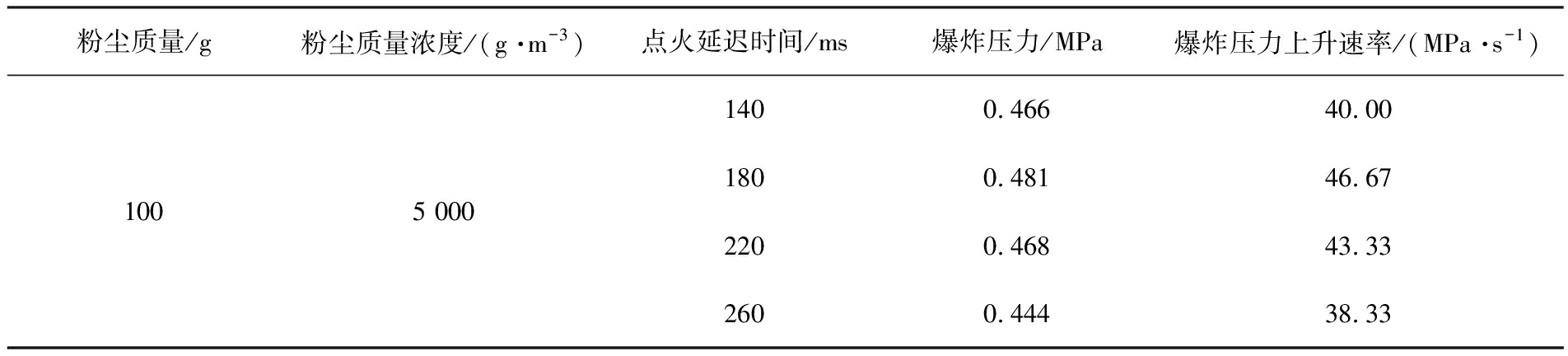
不同点火延迟时间下粒径为1 μm锌粉的爆炸压力和爆炸压力上升速率如表1所示。质量浓度为5 000 g/m3条件下,测得180 ms为1 μm锌粉最佳点火延迟时间, 此时爆炸压力为0.481 MPa, 爆炸压力上升速率为46.67 MPa/s。
表1 不同点火延迟时间下粒径为1 μm锌粉的爆炸压力和上升速率
Tab.1 Explosion pressures and rates of pressure rise of 1 μm zinc powders at different ignition delay times
粉尘质量/g粉尘质量浓度/(g·m-3)点火延迟时间/ms爆炸压力/MPa爆炸压力上升速率/(MPa·s-1)1005 0001400.466 40.001800.48146.672200.468 43.332600.444 38.33
(a)爆炸压力及爆炸压力上升速率
(b)爆炸压力时间及爆炸压力上升速率时间
图5 爆炸压力、 上升速率和所需时间随点火延迟时间的变化曲线
Fig.5 Curves of explosion pressures, rates of pressure rise, and required times to achieve both with ignition delay times
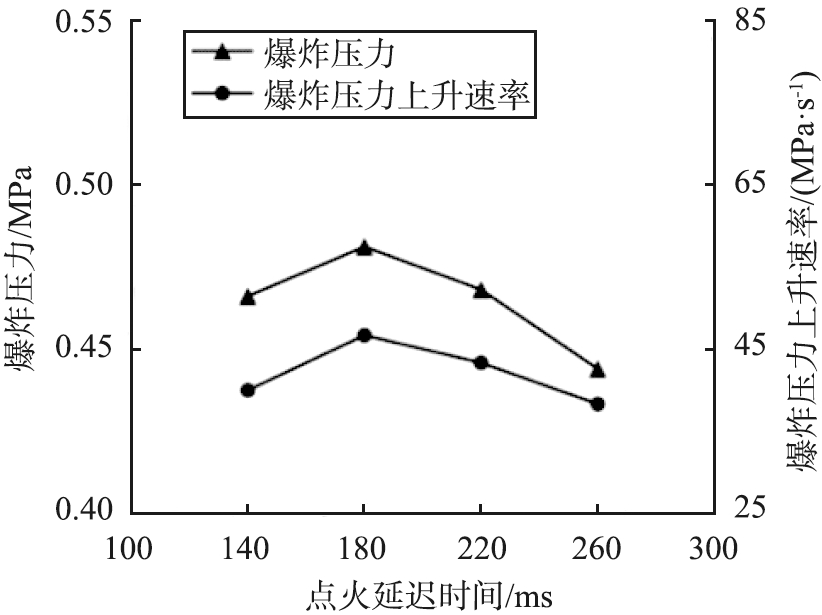
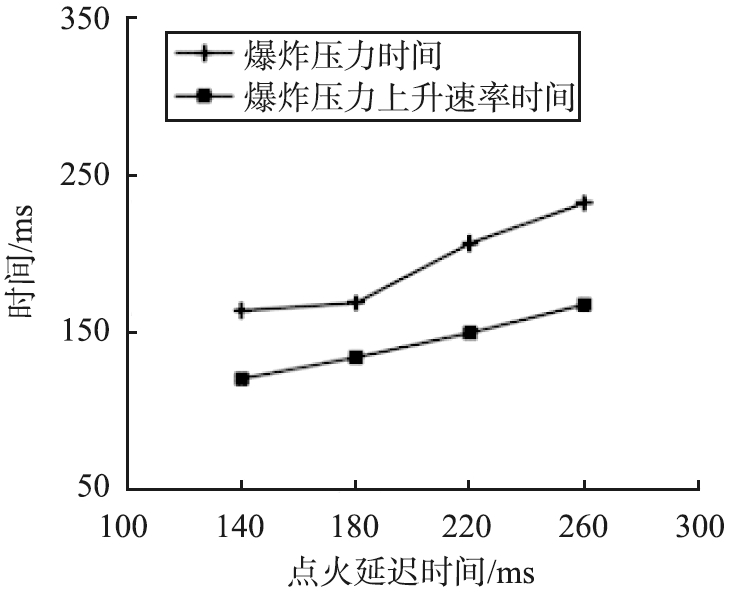
图5所示为锌粉爆炸压力、上升速率及达二者所需时间随点火延迟时间的变化曲线。由图可知,锌粉爆炸压力和爆炸压力上升速率受点火延迟时间影响呈先上升后下降的变化趋势,爆炸压力时间和到达爆炸压力上升速率时间随点火延迟时间增加呈先减少后增加趋势。
点火延迟时间对锌粉爆炸的影响主要取决于爆炸时刻粉尘颗粒的运动状态和粉尘云的分布情况。粉尘随湍流向空中运动,速度快速上升至峰值,随着外部动力与自身重力逐渐平衡,速度下降并在一段时间后稳定在低值,形成利于爆炸发生的粉尘云[14]。点火延迟时间小于180 ms时锌粉主要受外力影响,湍流速度和动能处于高值,热量易散失,引起淬火效应[15],粉尘难燃烧,产生的爆炸压力和爆炸压力上升速率较小,爆炸压力时间和爆炸压力上升速率时间较长。点火延迟时间大于180 ms时,粉尘受自身重力作用开始沉降,随着悬浮于空中的粉尘量减少,粉尘颗粒间距增大,热量传递的难度提高,周围空气体积增幅减小,爆炸压力和爆炸压力上升速率减小,点火后达到爆炸压力和爆炸压力上升速率所需时间延长。点火延迟时间为180 ms时锌粉的湍流速度和动能稳定在低值且粉尘云分布均匀,此时点燃粉尘使燃烧反应得以最大程度进行,产生的高热量使温度升高,周围空气受热迅速膨胀,压力在短时间内上升至峰值。此时为最佳点火延迟时间,产生的爆炸压力和爆炸压力上升速率最高,且达到二者所用时间最短。
2.3 锌粉爆炸下限
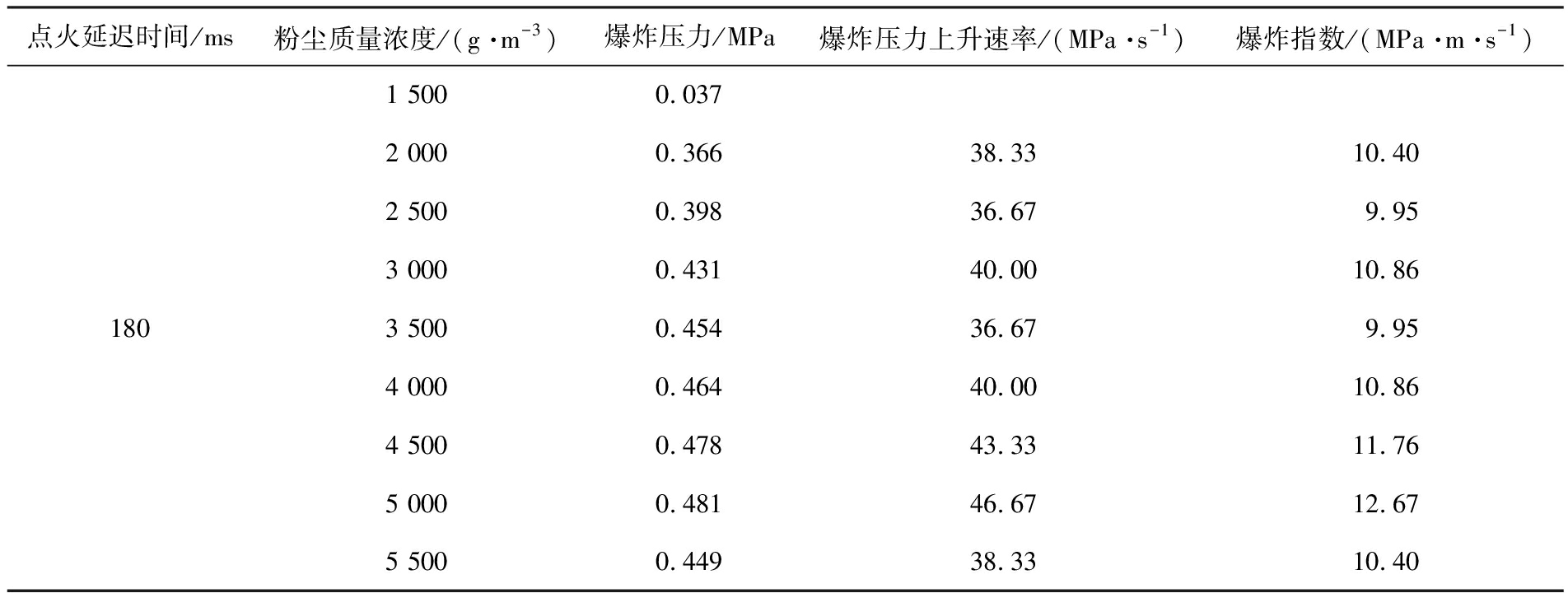
不同质量浓度条件下粒径为1 μm锌粉爆炸压力、 爆炸压力上升速率和爆炸指数如表2所示。 由表可知, 1 μm锌粉未发生爆炸的最大质量浓度是1 500 g/m3, 此时爆炸压力为0.037 MPa, 小于0.05 MPa; 1 μm锌粉爆炸成功的最小质量浓度为2 000 g/m3, 质量浓度大于等于2 000 g/m3时, 爆炸压力大于0.05 MPa, 锌粉爆炸下限为1 500 ~2 000 g/m3。
表2 不同质量浓度下粒径为1 μm锌粉爆炸压力、 爆炸压力上升速率和爆炸指数
Tab.2 Explosion pressures, rates of pressure rise,and explosion indexes of 1 μm zinc powders at different concentrations
点火延迟时间/ms粉尘质量浓度/(g·m-3)爆炸压力/MPa爆炸压力上升速率/(MPa·s-1)爆炸指数/(MPa·m·s-1)1801 5000.0372 0000.36638.3310.402 5000.39836.679.953 0000.43140.0010.863 5000.45436.679.954 0000.46440.0010.864 5000.47843.3311.765 0000.48146.6712.675 5000.44938.3310.40
2.4 锌粉最大爆炸压力及爆炸压力上升速率
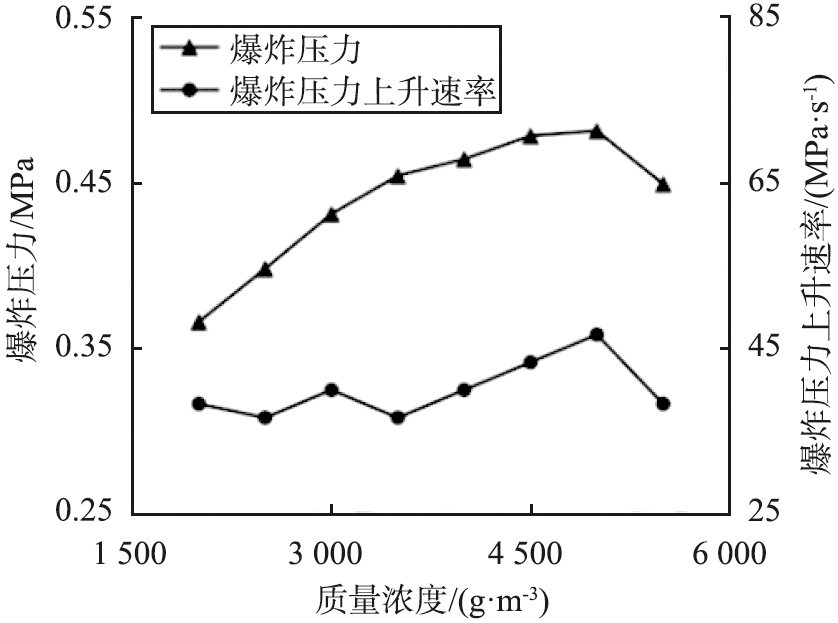
由表2可知,粉尘质量浓度为5 000 g/m3时,测得1 μm锌粉最大爆炸压力0.481 MPa和最大爆炸压力上升速率为46.67 MPa/s。
(a)爆炸压力及爆炸压力上升速率
(b)爆炸压力时间及爆炸压力上升速率时间
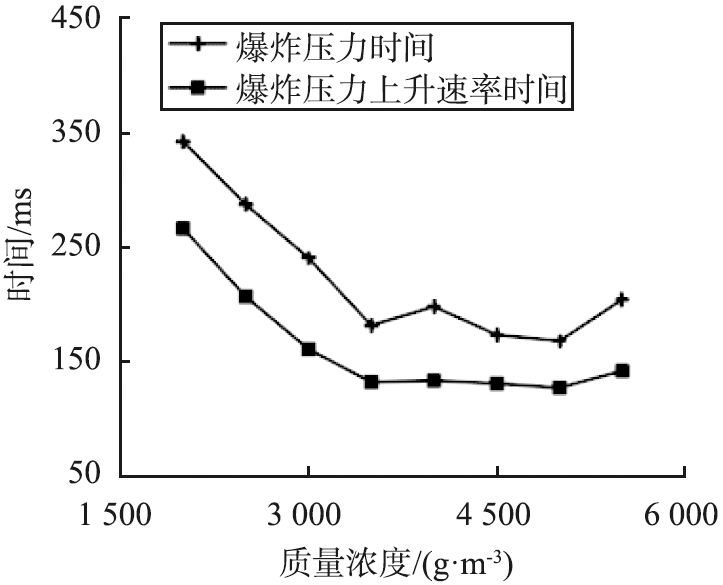
图6 爆炸压力、 上升速率及所需时间随质量浓度的变化曲线
Fig.6 Curves of explosion pressures, rates of pressure rise, and required times to achieve both with concentrations
图6所示为锌粉爆炸压力、上升速率及达二者所需时间随质量浓度的变化曲线。由图可知,在爆炸成功的前提下,锌粉爆炸压力和爆炸压力上升速率在质量浓度影响下整体呈现先增后减的规律;锌粉爆炸达爆炸压力和爆炸压力上升速率的时间随质量浓度增加大幅下降后,在3 500 ~5 000 g/m3范围内相对稳定,之后微幅上升。
锌粉质量浓度的增大在不同范围内对锌粉爆炸具有不同作用, 主要通过影响热量产生和传递实现。 质量浓度小于等于5 000 g/m3时, 增大质量浓度能提高爆炸压力和爆炸压力上升速率, 是因为粉尘量的增多使反应愈加充分, 产生的热量随之增加, 同时粉尘颗粒间距缩小利于热量传递。 质量浓度大于5 000 g/m3时, 锌粉过多导致氧气不足以供给燃烧反应, 产生的热量降低。 同时, 存在大量无法参与燃烧的粉尘吸收热量并聚集成粒径更大的颗粒, 表面的氧化锌面积增大, 难以击穿, 发生燃烧的概率降低。 多重原因导致锌粉燃烧产生的热量对周围空气的加热能力和向外传递能力减弱, 爆炸压力和爆炸压力上升速率随之下降。
粉尘质量浓度对爆炸压力时间和爆炸压力上升速率时间增加的影响在于其延长了粉尘在容器中心滞留的时间,热量在粉尘间传递的距离缩短,爆炸压力时间和爆炸压力上升速率时间大幅缩短。达到一定质量浓度后,分子间的排斥力[16]使爆炸压力时间和爆炸压力上升速率时间保持相对稳定,在质量浓度进一步升高后出现轻微上升趋势。
2.5 锌粉爆炸危险性
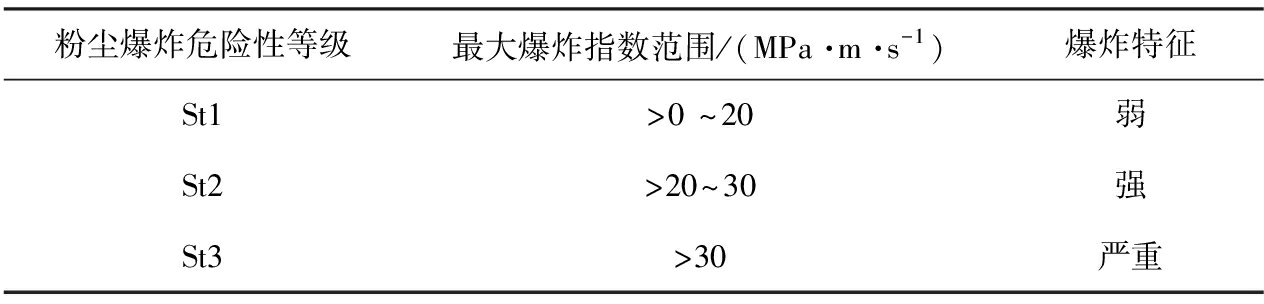
表3所示为粉尘爆炸危险性分级表[17-18], 粉尘爆炸危险等级随最大爆炸指数增大而升高, 表明爆炸猛烈程度高, 爆炸危险性强。锌粉质量浓度为5 000 g/m3时获得最大爆炸指数为12.67 MPa·m/s,与表3对比可知,微米级锌粉最大爆炸指数在0~20 MPa·m/s范围内,爆炸危险性等级属于St1,爆炸危险性较弱。
表3 粉尘爆炸危险性分级
Tab.3 Hazard classification of dust explosiveness
粉尘爆炸危险性等级最大爆炸指数范围/(MPa·m·s-1)爆炸特征St1>0 ~20弱St2>20~30强St3>30严重
3 结论
1)锌粉爆炸过程发生气相燃烧反应,颗粒直径越小,越易快速释放锌蒸气,发生爆炸的可能性和强度越高。
2)粒径为1 μm锌粉的最佳点火延迟时间为180 ms。 在此条件下, 测得爆炸下限为1 500~2 000 g/m3, 质量浓度为5 000 g/m3时达到最大爆炸压力、 最大爆炸压力上升速率以及最大爆炸指数, 分别为0.481 MPa、 46.67 MPa/s、 12.67 MPa·m/s。 由此判断微米级锌粉爆炸危险性等级属于St1, 爆炸危险性较弱。
3)点火延迟时间对锌粉爆炸特征参数的影响主要取决于爆炸时刻粉尘颗粒的运动状态和粉尘云的分布情况,随点火延迟时间增加,爆炸压力和爆炸压力上升速率呈上升后下降趋势,达到二者所需时间呈先下降后上升趋势。质量浓度的改变对锌粉爆炸特征参数的影响的作用主要通过影响热量产生和传递实现,锌粉爆炸压力和爆炸压力上升速率随质量浓度增加呈先增后减的变化规律,爆炸压力时间和爆炸压力上升速率时间随质量浓度增加大幅缩短后相对稳定。
[1]陈刚, 张晓蕾, 徐帅, 等. 我国2005—2020年粉尘爆炸事故统计分析[J]. 中国安全科学学报, 2022, 32(8): 76-83.
CHEN G, ZHANG X L, XU S, et al. Statistical analysis on dust explosion accidents in China from 2005 to 2020[J]. China Safety Science Journal, 2022, 32(8): 76-83.
[2]WANG X W, WANG Z R, NI L, et al. Explosion characteristics of aluminum powder in different mixed gas environments[J]. Powder Technology, 2020, 369: 53-71.
[3]SERRANO J, RATKOVICH N, MUNOZ F. Explosion severity behavior of micro/nano-sized aluminum dust in the 20 L sphere: influence of the particle size distribution (PSD) and nozzle geometry[J]. Process Safety and Environmental Protection, 2021, 152: 1-13.
[4]REDING N S, FARRELL T M, VERMA A, et al. Effect of particle morphology on metal dust deflagration sensitivity and severity[J]. Journal of Loss Prevention in the Process Industries, 2021, 70(1): 104396.
[5]MILLOGO M, BERNARD S, GILLARD P. Combustion characteristics of pure aluminum and aluminum alloys powders[J]. Journal of Loss Prevention in the Process Industries, 2020, 68(1): 104270.
[6]LUO J W, WANG Q H, CHUNG Y H, et al. Hazard evaluation, explosion risk, and thermal behaviour of magnesium-aluminium alloys during the polishing process by using a 20 L apparatus, MIEA, and TGA[J]. Process Safety and Environmental Protection, 2021, 153: 268-277.
[7]ECKHOFF R K, 李刚. 可燃粉尘爆炸基础研究综述[J]. 安全与环境学报, 2021, 21(3): 1068-1075.
ECKHOFF R K, LI G. Review of the basic researches on combustible dust explosions[J]. Journal of Safety and Environment, 2021, 21(3): 1068-1075.
[8]GUAN W L, JIN M H, DONG C J, et al. Analysis on research trends with dust explosions by bibliometric approach[J]. Journal of Loss Prevention in the Process Industries, 2023, 81: 104958.
[9]WANG Z, MENG X B, LIU J Q, et al. Flame propagation behaviours and explosion characteristics of Al-Mg alloy dust based on thermodynamic analysis[J]. Powder Technology, 2022, 406: 117559.
[10]中国煤炭工业协会. 粉尘云最大爆炸压力和最大压力上升速率测定方法: GB/T 16426—1996[S]. 北京: 中国标准出版社, 1996.
China National Coal Association. Determination for maximum explosion pressure and maximum rate of pressure rise of dust cloud: GB/T 16426—1996[S]. Beijing: China Standards Press, 1996.
[11]全国安全生产标准化技术委员会. 粉尘云爆炸下限浓度测定方法: GB/T 16425—2018[S]. 北京: 中国标准出版社, 2018.
National Safety Production Standardization Technical Committee. Determination for minimum explosive concentration of dust clouds: GB/T 16425—2018[S]. Beijing: China Standards Press, 2018.
[12]XIONG X Y, GAO K, MU J, et al. Study on explosion characteristic parameters and induction mechanism of magnesium powder/hydrogen hybrids[J]. Fuel, 2022, 326: 125077.
[13]JING Q, WANG D, LIU Q M, et al. Ignition sensitivity and explosion behaviors of micron-sized aluminum powder: comparison between flake aluminum powder and spherical aluminum powder[J]. Chemical Engineering Science, 2022, 252: 117502.
[14]CASTELLANOS D, CARRETO V, SKJOLD T, et al. Construction of a 36 L dust explosion apparatus and turbulence flow field comparison with a standard 20 L dust explosion vessel[J]. Journal of Loss Prevention in the Process Industries, 2018, 55: 113-123.
[15]赵一姝, 范健强, 白建平, 等. 粉尘浓度对20 L球罐内硫磺粉尘分散过程流场特性的影响[J]. 中国安全生产科学技术, 2018, 14(7): 48-53.
ZHAO Y S, FAN J Q, BAI J P, et al. Influence of dust concentration on flow field characteristics of sulfur dust during dispersion process in 20 L spherical tank[J]. Journal of Safety Science and Technology, 2018, 14(7): 48-53.
[16]林柏泉, 梅晓凝, 王可, 等. 基于20 L球形爆炸装置的微米级铝粉爆炸特性试验[J]. 北京理工大学学报, 2016, 36(7): 661-667.
LIN B Q, MEI X N, WNAG K, et al. Explosion characteristics of micro-aluminum powders in 20 L spherical vessels[J]. Transactions of Beijing Institute of Technology, 2016, 36(7): 661-667.
[17]Explosion protection systems-Part 1: Determination of explotiion indices of combustible dusts in air: ISO 6184—1:1985[S/OL]. [2023-02-16]. https://www.iso.org/obp/ui/#iso:std:iso:6184:-1:ed-1:v1:en.
[18]乐有邦, 吴晓煜, 张倩倩, 等. 粉尘爆炸危险性分级研究及金属粉尘试分级[C]//中国金属学会冶金安全与健康分会. 中国金属学会冶金安全与健康分会学术年会论文集: 2016年卷. [S.L.):(s.n.], 2016: 85-92.
LE Y B, WU X Y, ZHANG Q Q, et al. Dust explosion risk classification research and metal dust trial classification[C]//Metallurgical Safety and Health Branch of Chinese Society for Metals. Proceedings of the Annual Conference of Metallurgical Safety and Health Branch of The Chinese Society for Metals: 2011. [S.L.):(s.n.], 2016: 85-92.